What Is Canola?
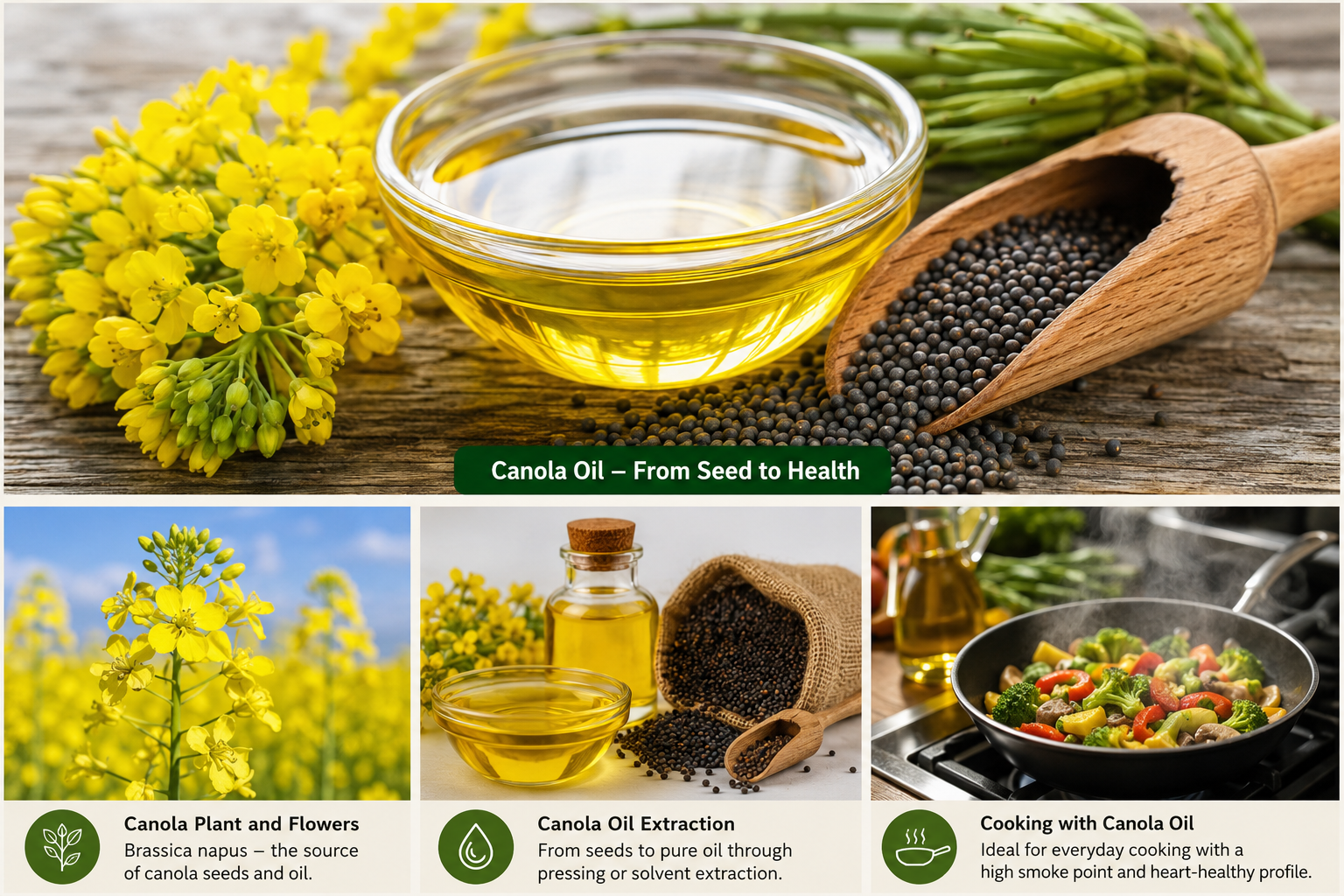
Canola is one of the world’s most important oilseed crops. After soybean, Brassica napus (canola) is the second most widely cultivated oilseed crop worldwide. Traditionally, B. napus contained high levels of erucic acid in the oil and glucosinolates in the meal, which limited its suitability for human consumption and animal feed. ‘Canola’ refers to rapeseed varieties that produce oil containing less than 2% erucic acid and meal containing less than 30 μmol g⁻¹ glucosinolates, making them safe and suitable for food and feed applications.
History
In the early 1970s, Canadian plant breeders developed improved Brassica napus varieties through conventional breeding that were low in both erucic acid and glucosinolates. These improved varieties were named ‘CANOLA‘, a term coined from ‘Canadian Oil, Low Acid‘, referring to rapeseed with lower erucic acid content developed in Canada. Since then, canola has become one of the world’s leading edible oil crops because of its excellent nutritional quality, high oil content and wide range of food and industrial applications.

Canola vs. Rapeseed vs Mustard Oils
Mustard oil is mainly obtained from Brassica juncea (Indian mustard), B. nigra (black mustard) and B. carinata (Ethiopian mustard). It has a characteristic pungent flavour and aroma and, in traditional varieties, contains relatively high levels of erucic acid and glucosinolates. Rapeseed oil is primarily produced from Brassica napus and B. rapa. Modern rapeseed varieties with less than 2% erucic acid and less than 30 μmol g⁻¹ glucosinolates are classified as canola. Compared with traditional mustard oil, canola oil has a milder taste, a more favourable fatty acid profile and is widely preferred as a healthy edible cooking oil.
Nutritional Composition of Canola Seeds
Canola seeds contain approximately 40–45% oil, 20–25% protein, 15–20% carbohydrates, 6–12% crude fibre and 3–5% ash, making them one of the richest oilseed crops. They are also an excellent source of essential minerals, including calcium, magnesium, potassium, phosphorus, sulphur, iron and zinc, as well as vitamins such as vitamin E (tocopherols), vitamin K and B-complex vitamins (particularly thiamine, riboflavin, niacin and folate). In addition, canola seeds are rich in phytosterols, phenolic compounds, carotenoids and natural antioxidants, which enhance their nutritional value and contribute to their antioxidant and health-promoting properties.
Health Benefits of Canola Oil
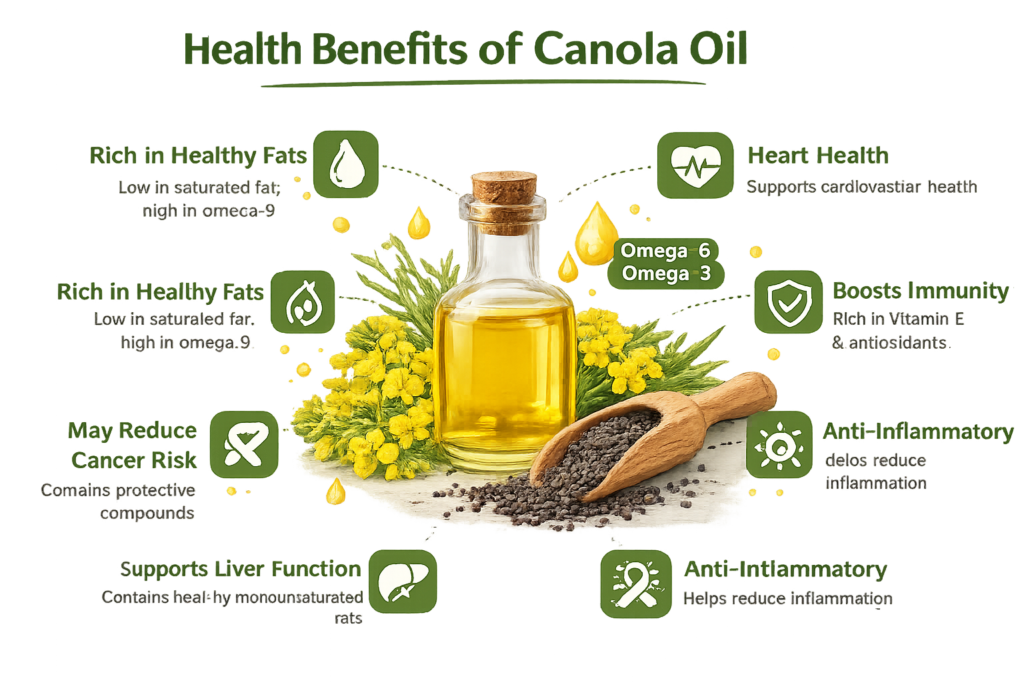
Canola oil is widely regarded as one of the healthiest edible vegetable oils because of its favourable fatty acid composition. It contains only about 7% saturated fatty acids, while 60–65% of its fatty acids are monounsaturated fats, primarily oleic acid (C18:1), which is associated with improved heart health and healthy cholesterol levels. Canola oil also provides 28–32% polyunsaturated fatty acids, including linoleic acid (C18:2, omega-6) (approximately 21%) and alpha-linolenic acid (C18:3, omega-3) (approximately 11%), both of which are essential fatty acids that must be obtained through the diet. In addition, canola oil contains valuable bioactive compounds, including tocopherols (vitamin E), phytosterols, phenolic compounds and carotenoids, which possess antioxidant and anti-inflammatory properties and may help reduce the risk of cardiovascular disease and other chronic health conditions when consumed as part of a balanced diet.
Canola Meal and Its Uses
In addition to edible oil, canola processing produces canola meal and canola flour, valuable by-products rich in protein and other nutrients. Canola meal contains approximately 36–40% crude protein (about 44–50% on a dry matter basis), making it an excellent source of protein for livestock, poultry, dairy cattle, aquaculture and other animal feeds. It also provides essential amino acids, minerals and dietary fibre, contributing to balanced animal nutrition. In recent years, highly purified canola protein has also gained attention for use in human foods, including plant-based protein ingredients, bakery products, beverages and nutritional supplements, owing to its high nutritional quality and functional properties.
How Is Canola Oil Extracted?
The method used to extract oil from canola seeds plays an important role in determining the oil yield, nutritional quality, flavour and shelf life. There are three major methods of canola oil extraction: mechanical pressing (cold or expeller pressing), solvent extraction and supercritical fluid extraction. Mechanical pressing, including traditional Desi Kohlu (wooden or stone oil press) and modern expeller oil extraction machines, is an environmentally friendly method that does not require chemical solvents. This process retains more natural antioxidants, tocopherols and bioactive compounds in the oil, although it produces a lower oil yield and leaves more residual oil in the press cake compared with solvent extraction. In contrast, solvent extraction provides a higher oil recovery and is widely used in commercial industries, while supercritical fluid extraction (typically using carbon dioxide) produces high-quality oil with minimal oxidation but is currently limited by its high equipment and operating costs.
When Can Canola Oil Become Harmful?
Commercial canola oil undergoes several refining processes, including degumming, neutralisation, bleaching and deodorisation, to improve its stability, flavour, appearance and shelf life. Although refined canola oil is safe for normal cooking, it can begin to deteriorate when repeatedly heated or exposed to excessively high temperatures for prolonged periods. During heating, oxidation and thermal degradation produce undesirable compounds such as peroxides, aldehydes, ketones and other oxidation products, while natural antioxidants such as vitamin E (tocopherols) gradually break down. Deep frying further accelerates these chemical reactions, particularly when the same oil is reused multiple times, reducing both its nutritional value and oxidative stability.
Research has shown that prolonged heating of vegetable oils at temperatures around or above 180°C significantly alters their chemical composition, increases the formation of oxidation products and decreases the concentration of beneficial bioactive compounds. Regular consumption of repeatedly heated or highly degraded cooking oils has been associated with oxidative stress, inflammation, impaired cardiovascular health and an increased risk of certain chronic diseases in experimental and epidemiological studies. Therefore, to maximise both safety and nutritional quality, canola oil should not be overheated, repeatedly reused for deep frying, or heated beyond its recommended smoke point.
Smoke Point and Cooking Applications
The smoke point is the temperature at which an oil begins to break down and produce visible smoke. Once this temperature is exceeded, the oil starts to degrade, forming undesirable oxidation products, losing its nutritional value and developing unpleasant flavours and odours. Therefore, selecting an oil with an appropriate smoke point for the intended cooking method is important for both food quality and health.
| Oil | Approximate Smoke Point (°C) |
| Refined Canola Oil | 204–238 |
| Refined Soybean Oil | 230–238 |
| Refined Palm Oil | 230–235 |
| Refined Sunflower Oil | 225–232 |
| Refined Olive Oil | 230–240 |
| Extra Virgin (Organic) Olive Oil | 190–210 |
| Cold-Pressed/Organic Canola Oil (Unrefined) | 160–205 |
Is Heated Canola Oil Harmful?
Refining generally increases the smoke point of canola oil by removing impurities, free fatty acids, moisture and suspended particles. As a result, refined canola oil is better suited for high-temperature cooking methods such as stir-frying and deep frying. In contrast, cold-pressed (organic) canola oil retains more natural antioxidants, vitamins and bioactive compounds but has a comparatively lower smoke point. Therefore, it is best used for salad dressings, baking, light sautéing and low- to medium-heat cooking. Although cold-pressed canola oil can be used for occasional cooking, it should not be repeatedly heated or reused for deep frying, as repeated heating accelerates oxidation and reduces its nutritional quality.
Research has shown that canola oil retains most of its beneficial compounds when heated to approximately 150°C, making it suitable for normal household cooking. It can also be used for deep frying at temperatures up to 190°C for limited periods. However, prolonged heating above this temperature or repeated reuse of the same oil markedly increases the formation of oxidation products, leading to deterioration in oil quality, flavour and nutritional value.
Final Verdict
Cold-pressed or organic canola oil is generally considered more nutritious because it is extracted without harsh chemical solvents or extensive refining, thereby preserving more natural antioxidants, tocopherols (vitamin E), phytosterols and other beneficial bioactive compounds. It is an excellent choice for salad dressings, baking, low- to medium-heat cooking and occasional frying. However, due to its relatively lower smoke point, it is not recommended for prolonged high-temperature cooking or repeated deep frying, as excessive heating accelerates oxidation and the formation of undesirable compounds. Refined canola oil, on the other hand, is more suitable for high-temperature cooking because of its greater thermal stability. Regardless of the type of oil used, avoiding repeated heating and storing oil in a cool, dark place are essential practices for maintaining its quality, nutritional value and safety.
References
- Azhar, M., Cahill, D. M., & Khan, G. A. (2025). A brief history of canola genetic gains: From classical breeding to genome editing. Physiologia Plantarum, 177(6), e70644.
- Baig, A., Zubair, M., Sumrra, S. H., Nazar, M. F., Zafar, M. N., Jabeen, K., … & Rashid, U. (2022). Heating effect on quality characteristics of mixed canola cooking oils. BMC Chemistry, 16(1), 3.
- Canola Council of Canada. (n.d.). Canola oil. https://www.canolacouncil.org/about-canola/oil/
- Lin, L., Allemekinders, H., Dansby, A., Campbell, L., Durance-Tod, S., Berger, A., & Jones, P. J. H. (2013). Evidence of health benefits of canola oil. Nutrition Reviews, 71(6), 370–385. https://doi.org/10.1111/nure.12033
- Sabbahi, R., Azzaoui, K., Rhazi, L., Ayerdi-Gotor, A., Aussenac, T., Depeint, F., … & Hammouti, B. (2023). Factors affecting the quality of canola grains and their implications for grain-based foods. Foods, 12(11), 2219.
- Saleem, M., Ali, H., Bilal, M., Atta, B. M., & Ahmad, N. (2023). Quality analysis of canola and mustard oil using fluorescence spectroscopy. Journal of Fluorescence, 33(5), 1695–1704.