
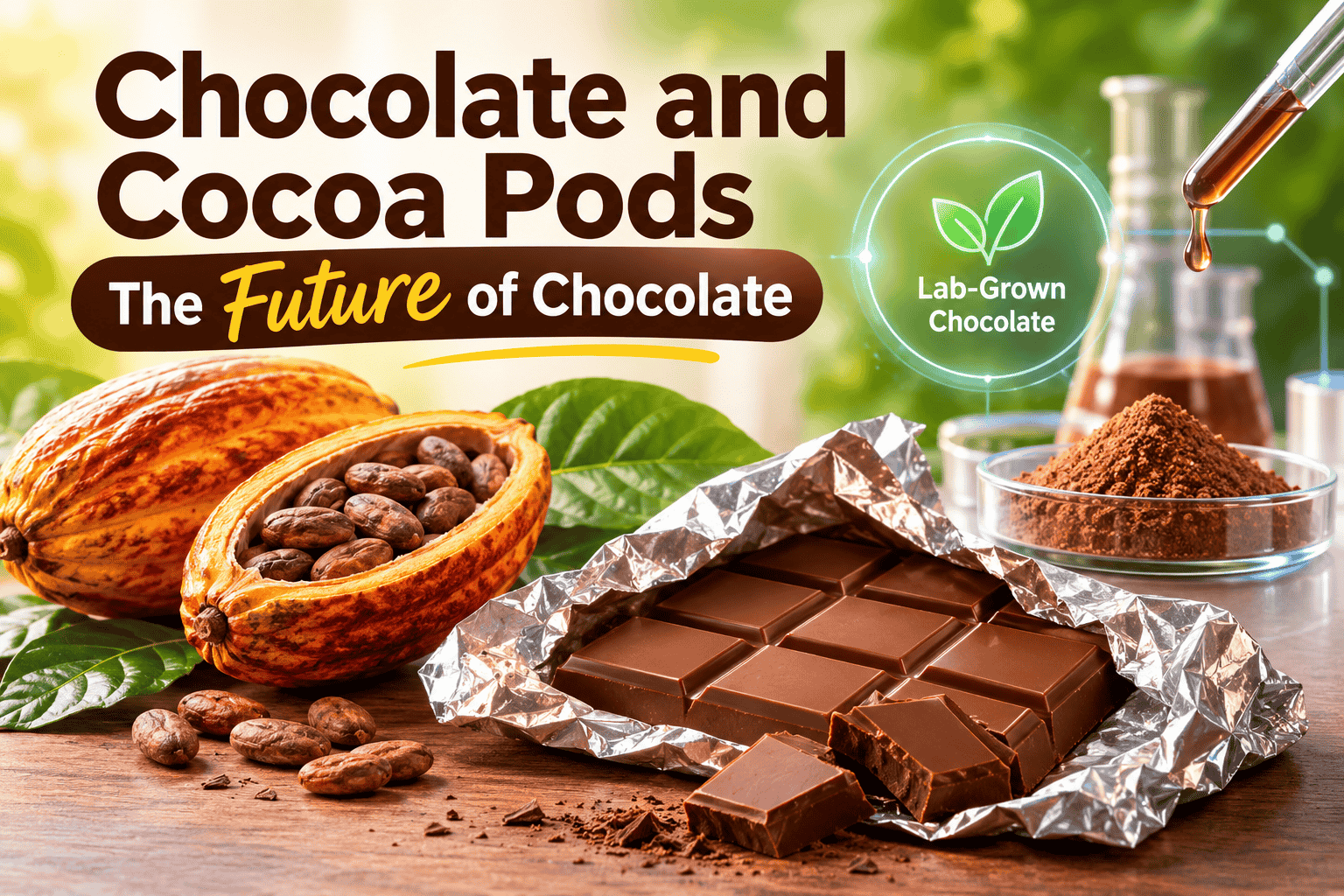
Chocolate has had a rough few years. Extreme weather and crop disease in West Africa, which grows most of the world’s cocoa, caused a global shortage [10]. In early 2026, consumer chocolate prices were up 14.4% on the year before [10]. The World Bank projects cocoa prices will fall by more than half in 2026 [11], but shelf prices stay high because manufacturers are still working through beans bought near the peak [12].
“From cocoa farms to laboratory-grown cocoa, innovation is reshaping the way we enjoy chocolate.”
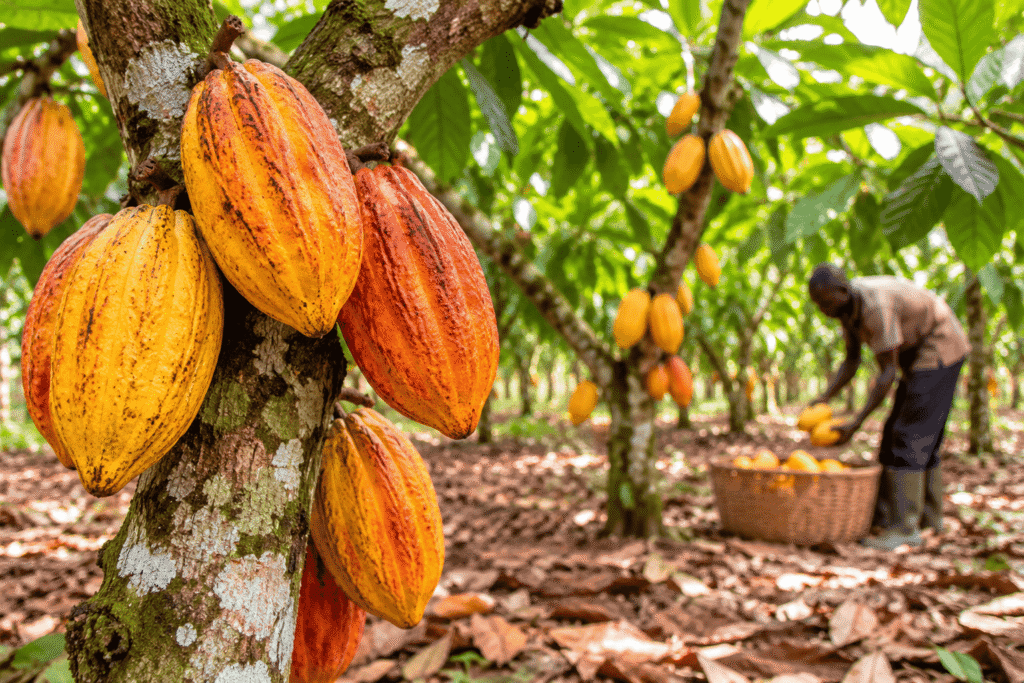
There is a bigger problem too. Cocoa is one of the leading drivers of illegal deforestation, and there is evidence of child labour on some cocoa farms [9]. So scientists started asking an unusual question: what if we didn’t need the tree at all?
So how do you make chocolate without a cocoa farm?
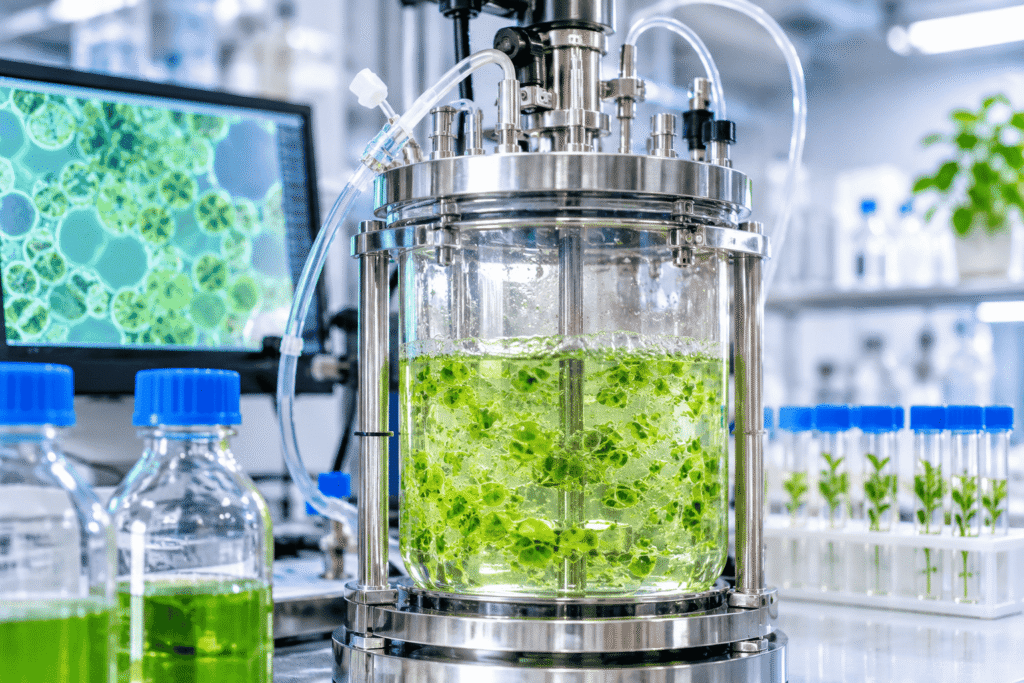
The technique is called cellular agriculture, and it’s less strange than it sounds. Scientists take a small sample from a cocoa plant with great flavour traits and grow its cells in a nutrient-rich liquid in a tank. Those cells are then processed into a chocolate ingredient [9]. Think of it like brewing, but for cocoa.
California Cultured, one of the pioneers, runs its cell cultures through the same fermenting, roasting and grinding steps a bean from a farm would go through [13]. The chocolate-making craft stays the same. Only the starting point changes.
Who’s making it?
This is no longer a handful of garage experiments:
- California Cultured (US) makes cocoa from plant cells [1]. Belgian confectioner Puratos has invested in it and announced plans to launch a cultured-cocoa chocolate product for professionals in the US [3][8].
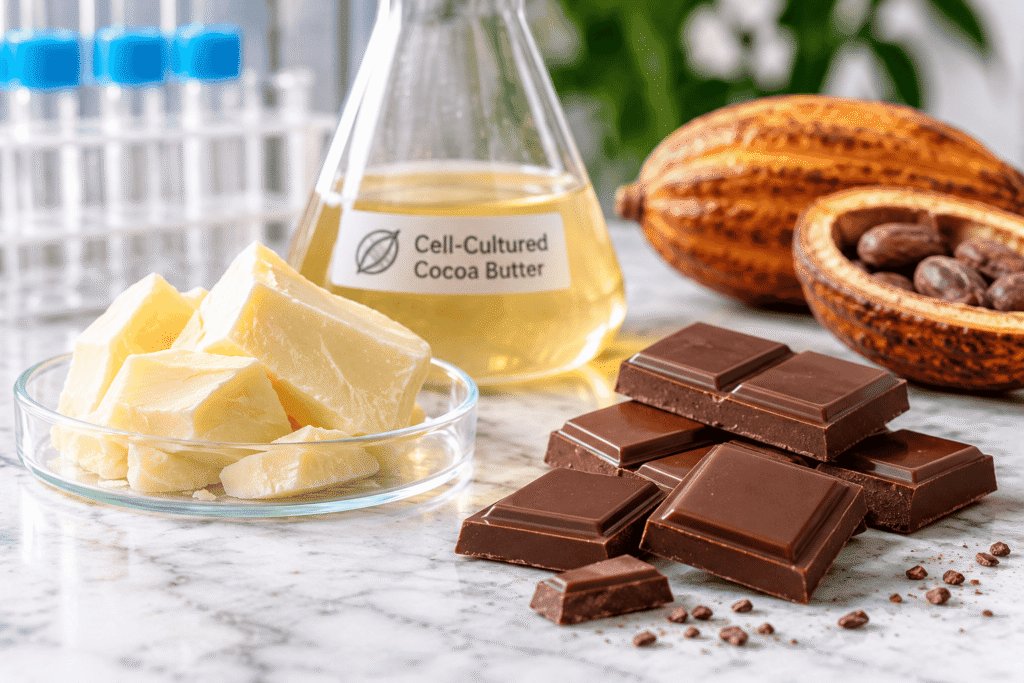
- Celleste Bio (Israel) worked with Mondelēz, which manufactured nearly a dozen milk chocolate prototype bars using cell-cultured cocoa butter [5][6]. The company calls its cocoa butter “bio-identical” to the conventional kind, with the same melt and texture [4].
- Galy (US), known for lab-grown cotton, is launching a chocolate brand called WunderHaus in the US this December, with a UAE rollout targeted for 2027. It blends cell-cultured cocoa with conventional cocoa [2].
- The Cultured Hub (Switzerland), backed by Bühler, Migros and Givaudan, has expanded its facility to help startups scale plant cell culture for cocoa and coffee [7].
The surprising part: one bean, a ton of cocoa butter
Here’s the stat that made me stop scrolling. Celleste’s scientists say a single cocoa bean could be used to generate up to one tonne of cocoa butter a year in a 1,000-litre bioreactor. Producing that much would normally need about a hectare of cocoa trees [4]. If that holds at scale, it could mean far less land use and deforestation behind every bar.
The sweetest innovations are those that bring pleasure and sustainability together
Is it healthier? Tastier?
I’d be cautious here. California Cultured’s CEO has suggested the lab version could be better than the tree-grown kind, with higher levels of polyphenols that “might have health benefits” [9]. Polyphenols are the antioxidant compounds behind dark chocolate’s good reputation, but this is a company’s hope, not settled science. For now, chocolate is still chocolate: lovely in moderation, with sugar and fat to keep in mind.
When can you actually taste it?
It’s close, but not quite here. Puratos said in February 2026 that it planned to bring a cultured-cocoa product to US professional customers toward the end of 2026 [8]. Celleste says its cocoa butter will be market ready by 2027 [6], and companies expect to begin supplying chocolate makers with cell-based cocoa powder in early 2027 [1]. Expect it first in professional kitchens and blended products, then on shelves.
No, your Halloween candy isn’t secretly lab-grown
A viral rumor claimed big brands had quietly swapped in lab-made cocoa. There is no credible evidence for that. Hershey said it has no active plans for lab-grown cocoa substitutes, and Nestlé said it is not developing lab-grown chocolate and is staying with traditional cocoa [8]. The lab-grown bar is real, but it hasn’t reached yours trick-or-treat bucket.
The honest hurdles
- Scale and cost. Scaling to industrial levels while staying cost-efficient and meeting regulations remains a major hurdle [5].
- Farmers. Millions of families depend on cocoa. Some chocolate lovers prefer to keep backing companies that pay cacao farmers directly [13]. A fair transition matters as much as the technology.
- Acceptance. Will people happily eat cocoa grown in a tank? Trust and clear labelling will decide that [6].
The bottom line
Lab-grown chocolate probably won’t replace a handmade bar from a single-origin farm. It might, though, take pressure off the cheapest, most mass-produced chocolate and give the planet some breathing room.
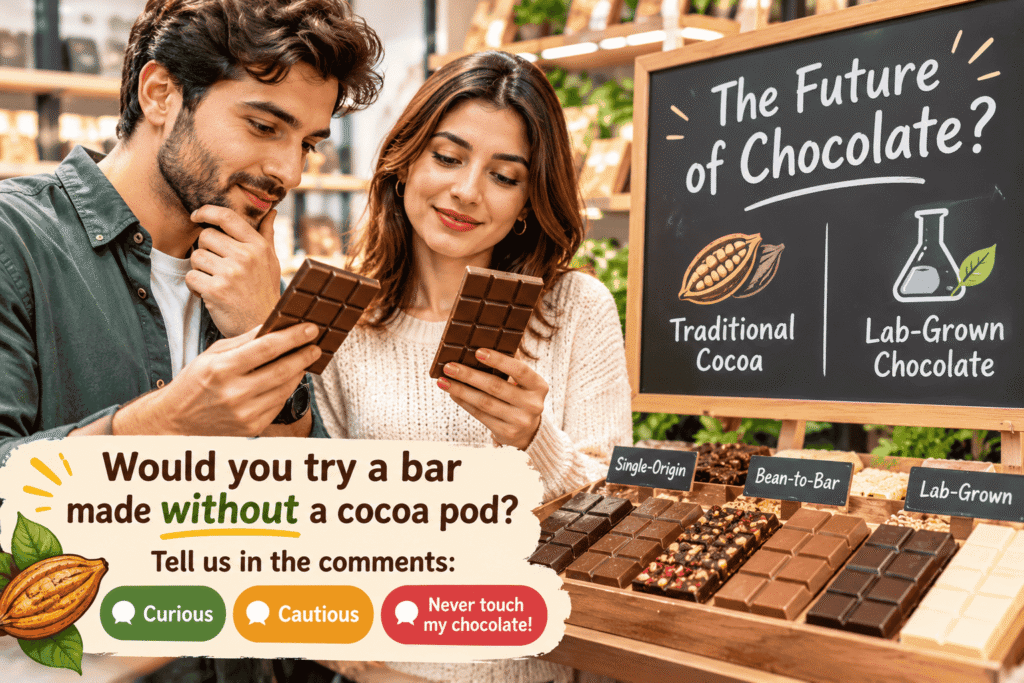
Would you try a bar made without a cocoa pod? Tell me in the comments: curious, cautious, or “never touch my chocolate”?
References
- Chemistry World. Could lab-grown cocoa be the solution to the climate and supply chain woes plaguing chocolate?
- Green Queen. Galy Expands Cell Culture Tech to Cocoa with US Launch of WunderHaus Chocolate Brand
- Green Queen. Puratos to Launch World’s First Cell-Based Chocolate for Professionals
- Calcalist (CTech). Israeli startup unveils world’s first chocolate bars made with lab-grown cocoa butter
- Interesting Engineering. Mondelez-backed startup debuts ‘world’s first’ chocolate bars made with cultured cocoa
- FoodNavigator. World’s first cell-based chocolate bar developed with Mondelēz
- Bakery&Snacks. The race to reinvent cocoa: lab-grown chocolate and cocoa alternatives
- Men’s Fitness. Lab Grown Halloween Candy Rumor: Hershey, Nestlé and Lindt Respond
- Yahoo News (The Week). The secrets of lab-grown chocolate
- ABC News Radio via The Pulse of NH. Valentine’s Day shoppers face soaring chocolate prices
- CropGPT. Cocoa Prices Forecast to Halve in 2026, Edge Up in 2027 (summarising the World Bank’s April 2026 outlook)
- Axios. Why your Valentine’s chocolates are so expensive
- Cathy Fiep, Substack. Does Chocolate Have a Future?

