Dietary fiber is a group of carbohydrates found mainly in plant-based foods. Unlike sugars and starches, it is not completely digested or absorbed in the stomach and small intestine. Instead, it passes into the large intestine, where some types are fermented by the gut microbiota. The amount and type of it vary considerably among different foods and crops. It includes non-starch polysaccharides (NSPs) such as cellulose, hemicellulose, pectins, gums and mucilages, as well as other non-digestible carbohydrate components and lignin.
Dietary fiber is traditionally divided into two main types:
Soluble fiber dissolves or swells in water and may form a viscous, gel-like substance in the digestive tract. It is found in foods such as oats, barley, beans, lentils, fruits, vegetables, nuts and seeds. Its important components include pectins, gums and mucilages. It can support digestive health and may help regulate blood glucose and cholesterol levels.
Insoluble fiber does not dissolve readily in water and helps increase stool bulk and promote regular bowel movements. Major sources include whole grains, wheat bran, vegetables, fruits, nuts and seeds. Important components include cellulose, some hemicelluloses and lignin.
Both types of fiber contribute to a healthy diet and consuming a variety of plant-based foods is the best way to obtain different types of dietary fiber.
How Much Fiber Do You Need?
The amount of dietary fiber needed varies with age, sex and energy requirements. For adults, a daily intake of at least 25 g is generally recommended to support normal bowel function. Many dietary guidelines suggest that adults aim for approximately 25–30 g or more per day, with higher intakes often associated with greater health benefits.
However, many people consume considerably less fiber than recommended. Increasing the intake of whole grains, vegetables, fruits, legumes, nuts and seeds can help meet its daily needs.
Table: Recommended Daily Fiber Intake Based on Age Group
Population
Age (years)
Daily fiber target (g/day)
Children
2-5
15
Children
5-11
20
Children
11-16
25
Adolescents
16-18
30
Adults
19+
30
Reported intake values illustrate that actual fiber consumption may fall below the recommended quantity in many age groups.
How Can You Reach Your Daily Fiber Target?
A simple way to increase intake is to include a source of fiber at every meal:
Breakfast: Oats, whole-grain cereal, fruit or seeds
Lunch: Whole-wheat roti, brown rice, lentils, beans and vegetables
Snack: Fresh fruit, nuts or seeds
Dinner: Vegetables, pulses and whole grains
When increasing fiber, do so gradually and drink adequate fluids to minimize bloating, gas and other digestive discomfort.
Table: Dietary Fiber Contents of Some Common Foods
Increasing dietary fiber intake requires a combination of consumer education, clearer food labelling, food reformulation and improved availability of fiber-rich foods. Food labels should clearly display its contents so consumers can easily identify healthier choices. Nutrition education can correct common misconceptions and increase awareness of its benefits, recommended intake and food sources. Food manufacturers can increase its level through reformulation and fortification, such as incorporating legumes into cereal-based products. Biofortification and crop breeding may also provide naturally higher-fiber grains and other crops. Greater production of fiber-rich crops, improved agricultural practices and collaboration among farmers, breeders, food processors and manufacturers can help ensure a reliable and affordable supply of fiber-rich foods.
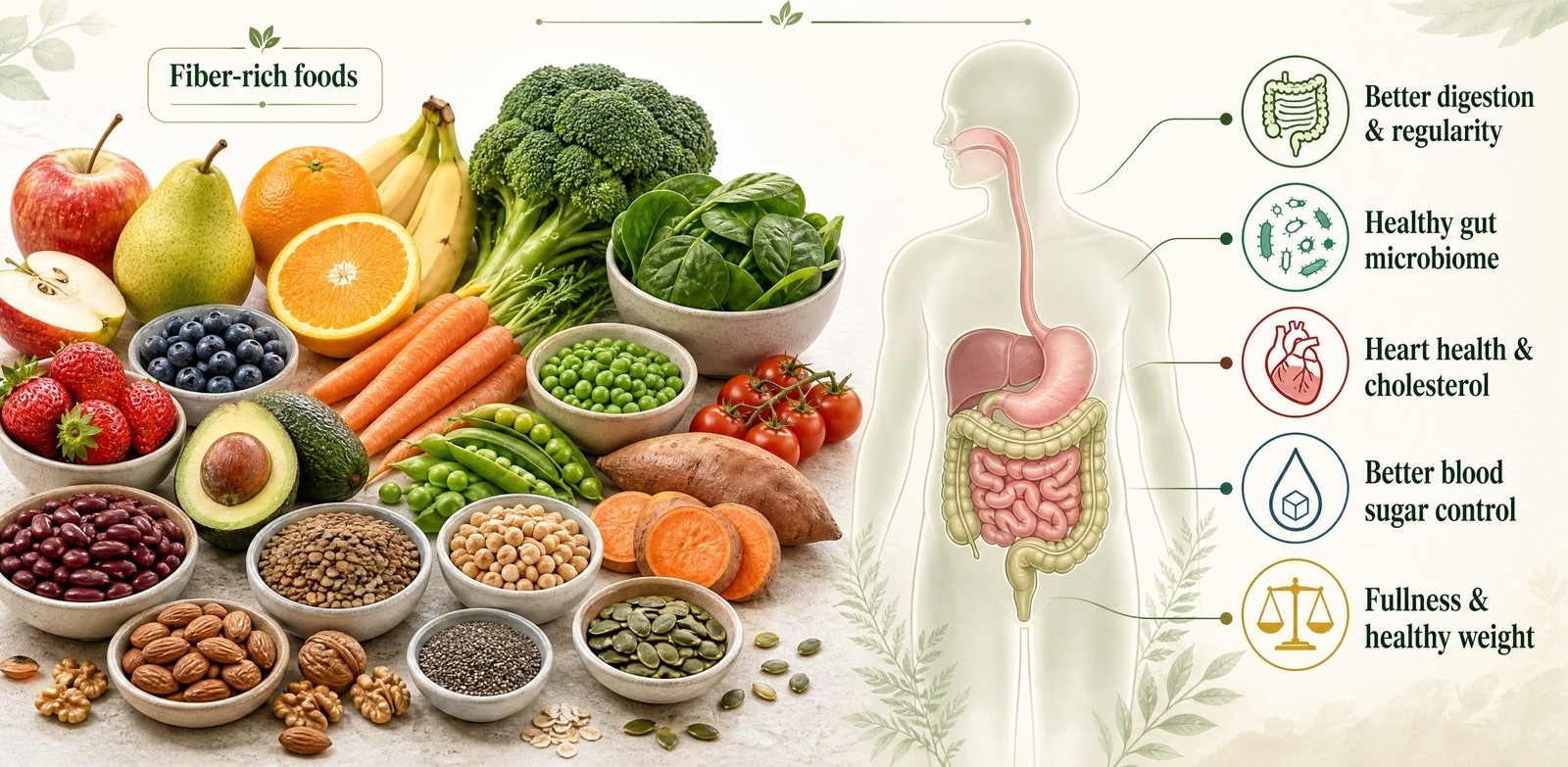
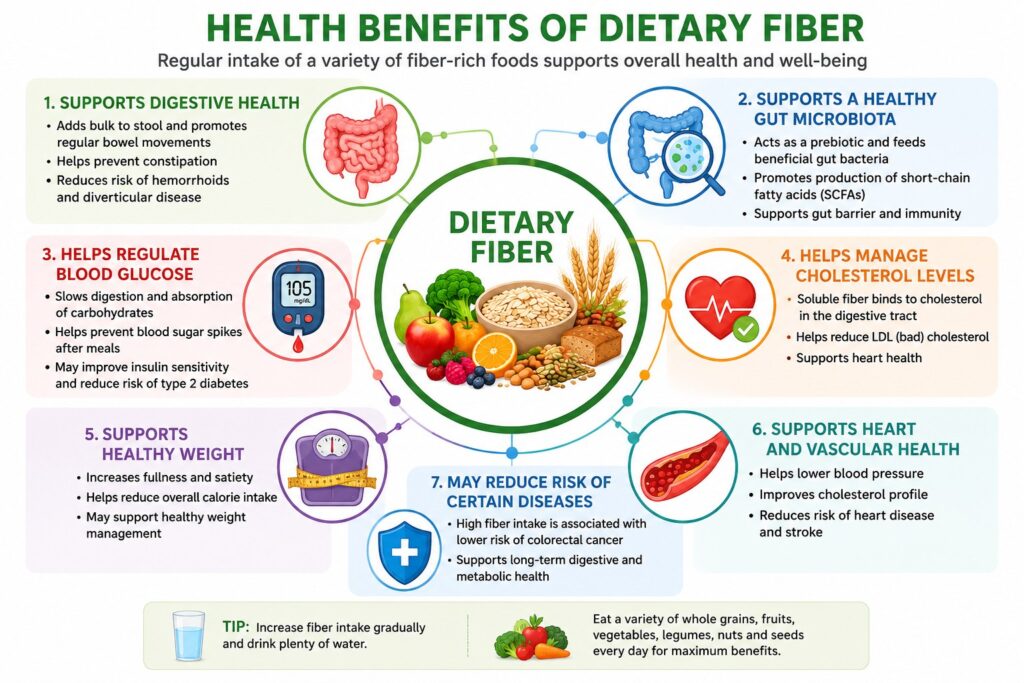
Dietary fiber provides several important health benefits, although its effects may vary depending on the type, amount and food source. Regular consumption of a variety of fiber-rich foods can support healthy digestion, gut microbiota, blood glucose regulation, cholesterol management, healthy weight and cardiovascular health. The following are some of the key health benefits of dietary fiber:
Dietary fiber plays an important role in maintaining a healthy gut microbiome. Certain beneficial gut bacteria use fermentable fibers as a source of energy and produce metabolites such as short-chain fatty acids (SCFAs), which support intestinal health. Some soluble fibers act as prebiotics, helping promote beneficial bacteria and maintain a balanced intestinal environment. Regular consumption of fiber-rich foods such as whole grains, legumes, fruits, vegetables, nuts and seeds can therefore support digestive and overall health. In addition to a fiber-rich diet, adequate hydration, regular physical activity and sufficient sleep can help support a healthy gut and overall well-being.
Let food be your medicine and medicine be your food
Bad Cholesterol Management
Soluble fiber, particularly beta-glucans found in oats and barley and fiber from psyllium, can help lower LDL (“bad”) cholesterol. It does this partly by reducing the reabsorption of bile acids in the intestine, causing the body to use more cholesterol to produce new bile acids. Regular intake of soluble fiber may therefore contribute to healthier cholesterol levels and reduce cardiovascular risk. Some fibers are also fermented by gut bacteria, producing short-chain fatty acids (SCFAs) that may further influence cholesterol metabolism. Fiber can also support blood glucose control and healthy body weight, providing additional benefits for cardiovascular health.
Cardiovascular Health
Dietary fiber, particularly soluble fiber, can support cardiovascular health by helping lower LDL (bad) cholesterol and improving overall cholesterol metabolism. Fiber-rich foods such as whole grains, legumes, fruits, vegetables, nuts and seeds also provide antioxidants and other beneficial plant compounds that may help reduce inflammation and support heart health.
Flaxseeds are a particularly nutritious source of soluble and insoluble fiber, alpha-linolenic acid (ALA) and lignans. Together, these components may support healthy cholesterol levels, blood pressure and blood-vessel function. Fiber can also promote fullness, support healthy body weight and contribute to a diverse gut microbiome, all of which may help reduce cardiovascular risk.
Dietary fiber can support healthy weight management by increasing fullness, slowing digestion and helping regulate food intake. Many high-fiber foods, such as fruits, vegetables, legumes and whole grains, are also nutrient-dense and relatively low in energy density, making them useful choices for a balanced diet.
Fiber may also influence body weight through the gut microbiome. Beneficial bacteria, including Bifidobacteria and Akkermansia, can contribute to a healthy intestinal barrier and metabolic function. Research in animals suggests that changes in these bacteria may be associated with reduced weight gain and improved insulin sensitivity, although more research is needed to confirm similar effects in humans.
Overall, regularly consuming a variety of fiber-rich plant foods, together with a balanced diet and active lifestyle, can help support healthy body weight and may contribute to reducing the risk of obesity.
A diet rich in dietary fiber is associated with a lower risk of colorectal cancer, although evidence for other cancers is less consistent. It may support colon health by increasing stool bulk and reducing intestinal transit time, which can decrease the exposure of the intestinal lining to potentially harmful compounds. Fermentation of certain fibers by gut bacteria produces short-chain fatty acids (SCFAs), particularly butyrate, which may help regulate inflammation and intestinal cell growth. It may also influence hormone metabolism, which is being studied in relation to hormone-dependent cancers. Overall, consuming its adequate quantity from whole grains, legumes, fruits, vegetables, nuts and seeds is an important part of a healthy dietary pattern, but it should not be considered a standalone treatment or guaranteed method of cancer prevention.
Digestive Health Improvement
Dietary fiber plays an important role in maintaining a healthy digestive system. It helps support a balanced gut microbiome, regular bowel movements and normal intestinal function. Some fermentable fibers act as prebiotics, providing nourishment for beneficial gut bacteria and supporting a healthy intestinal environment.
Variety on the plate brings diversity to the fiber that nourishes the gut
Normal Bowel Movements and Constipation
Insoluble fiber adds bulk to stool, while other types of fiber can absorb water and help soften stools. Together, these effects can promote regular bowel movements and help prevent constipation. Adequate fiber intake may also reduce the risk of problems associated with straining, such as hemorrhoids and may support overall colon health.
Blood Sugar Control
Dietary fiber, particularly soluble and viscous fiber, can help regulate blood glucose levels. When mixed with water in the digestive tract, soluble fiber can form a gel-like substance that slows the digestion and absorption of carbohydrates, helping reduce rapid increases in blood sugar after meals.
Fiber-rich foods may also improve satiety and insulin sensitivity, which can support healthy weight management and reduce the risk of insulin resistance and type 2 diabetes. Some fibers act as prebiotics, supporting beneficial gut bacteria that may contribute to glucose regulation and metabolic health.
The effect on blood glucose depends not only on the amount of fiber but also on the type of food, starch structure, processing, cooking method and overall composition. The glycemic index (GI) can help compare the effects of carbohydrate-containing foods on blood glucose, but a low-GI food is not necessarily healthier. Choosing minimally processed, fiber-rich foods such as oats, whole grains, beans, lentils, vegetables and whole fruits is generally a better approach for maintaining stable blood sugar levels.
References:
Gupta, P. D., & Rajyaguru, C. (2025). Food for bacteria: Dietary fibers keep gut healthy. International Journal of Medical Research and Medical Case Reports, 2(2). https://doi.org/04.2025/IJMRMCR/021
Lovegrove, J. A., Jackson, K. G., Kaimila, Y., Lignou, S., Lovegrove, A., Norton, V., O’Sullivan, D. M., Shewry, P., Tosi, P., & Tindall, M. J. (2025). Importance of dietary fiber, strategies for increasing intake and maintenance of the supply chain in the UK. Philosophical Transactions of the Royal Society B: Biological Sciences, 380(1935), 20240148. https://doi.org/10.1098/rstb.2024.0148
Razouki, A. S., Hameed, W. R., Naeem, B. A., Falaih, H. H., Nassar, S. A., & Mashchal, M. B. (2025). Metabolic effects of dietary fiber, carbohydrate, glucose, lipid metabolism on human health and nutritional therapy. Current Clinical and Medical Education, 3(3), 11–23.
Suresh, A., Shobna, Salaria, M., Morya, S., Khalid, W., Afzal, F. A., & Mukonzo Kasongo, E. L. (2024). Dietary fiber: An unmatched food component for sustainable health. Food and Agricultural Immunology, 35(1). https://doi.org/10.1080/09540105.2024.2384420
Hi, I’m a Food Technologist with a Master’s in Food Technology, passionate about nutrition, functional foods and healthy living. I created NutriFoodLife.com to share simple, science-based tips on food, diet and better eating habits. I focus on plant-based foods, protein-rich products and practical ways to make everyday nutrition healthier and smarter.